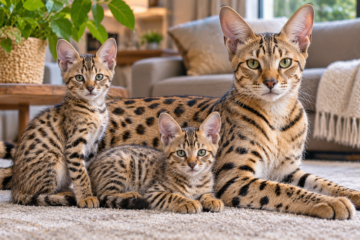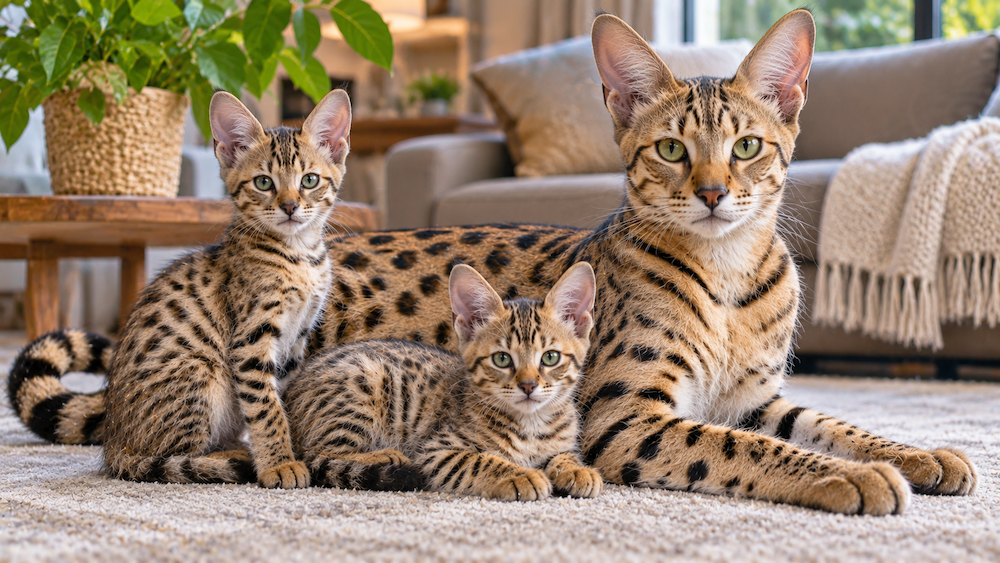
Savannah Kittens for Sale
Tall, athletic and beautifully spotted, the Savannah cat is one of the most distinctive companion cats in Texas. Before searching for Savannah kittens for sale, however, it is important to understand their serval ancestry, demanding exercise needs and the legal restrictions that may apply to particular generations and locations.
Explore Savannah cat listings at PetSalesTexas.com and take time to verify each breeder, kitten’s documented generation and the rules where you live.
Savannah Kittens for Sale
The Savannah cat originated from crosses between domestic cats and African servals. Today, breeders work with different generations and pedigrees, producing cats with striking spotted coats, large ears and long legs. Size, temperament and management needs can vary considerably between individuals and generations.
Savannah cats are not merely decorative, spotted house cats. They are often agile, curious and highly interactive. Many enjoy climbing, jumping, exploring cupboards and working through puzzle feeders, making secure housing and daily enrichment essential.
What Do F1, F2, F3 and Later Generations Mean?
An F1 Savannah has a serval parent, an F2 a serval grandparent and an F3 a serval great-grandparent; later generations are further removed. Breeders may also use registration terms such as SBT, which describe pedigree status rather than simply the number of generations from a serval. Ask for records rather than relying on a label in an advertisement.
Later-generation Savannahs may be easier to accommodate in a typical home, but they are still frequently energetic and exceptionally clever. Generation alone does not guarantee temperament, adult size or legality, and local rules may distinguish between hybrid generations.
What Should a Healthy Savannah Kitten Look Like?
Look for a bright, curious kitten with clear eyes, clean ears, comfortable breathing, a healthy coat and normal movement. Ask to see the kitten’s living conditions and veterinary history. The kitten should be appropriately socialized to household sounds, gentle handling and everyday routines before leaving its breeder.

Savannah Kittens for Sale Near Me
Buyers may search for Savannah kittens in Houston, Dallas–Fort Worth, Austin, San Antonio, El Paso and smaller Texas communities. Because responsibly bred litters can be limited, it is better to travel to a reputable breeder or join a waiting list than to rush into a purchase from an unverified online seller.
Are Savannah Cats Legal in Texas?
Texas law and local ordinances can regulate possession of servals and certain wild-cat hybrids. The answer may depend on the cat’s generation, documented ancestry and the specific city or county. Some municipalities impose stricter rules than state law, and housing associations or landlords may have separate restrictions. Do not assume every Savannah advertised in Texas can legally be kept at your address.
Before paying a deposit, contact your city animal services department and county authorities, and seek guidance from Texas Parks and Wildlife or the relevant state authority about any applicable wild-animal requirements. Ask for written clarification identifying the generation and documentation of the particular cat. Rules may change, so check the current requirements directly.
Choosing a Responsible Savannah Breeder
A responsible Texas breeder should explain the kitten’s generation and pedigree, show verifiable records, disclose the parents’ veterinary history and discuss adult size and behavior realistically. Ask to visit the breeding environment or arrange a detailed live video tour if distance makes an initial visit difficult. Beware of pressure to send a nonrefundable deposit without proper identification and paperwork.
Request age-appropriate vaccination and deworming records, information about parasite prevention, veterinary examination details and any breed-line health screening. Discuss how kittens are socialized and what diet they receive. Ask whether the breeder offers a written sales agreement, health provisions and a return policy.
Questions to Ask Before Buying
- What is the kitten’s exact generation, and can you show verified parentage?
- Have you confirmed the current state, county and city rules for this exact Savannah generation?
- Can I see the kitten with its mother and inspect the environment in which it was raised?
- What socialization, enrichment and handling has the kitten experienced?
- What veterinary records, health screening and registration paperwork will be supplied?
- What secure indoor space, catio or escape-proof enclosure will the adult cat require in Texas?
- What support or return policy is available if the placement does not work out?
Does a Savannah Cat Make a Good Family Pet?
Savannahs can be affectionate and loyal family companions, but their intense play, quick reactions and athletic strength are not ideal for every household. Active families who enjoy structured play and training may appreciate their energy; very young children or timid pets may find it overwhelming.
Teach children to let the cat approach voluntarily and never chase, grab or restrain it. Provide elevated retreat spaces and supervise all interactions. Introduce other pets gradually, and be especially cautious around birds, rodents and other small animals because hunting instincts can remain strong.
Are Savannah Cats Suitable for First-Time Owners?
For most first-time owners, a calmer domestic breed is the easier option. Savannahs are generally better suited to people with experience managing active cats, enough time for enrichment and the budget for secure facilities and veterinary care. A later-generation kitten may still require substantial daily engagement.
Savannah Cat Temperament and Personality
Savannah cats are often alert, curious and people-oriented. Many follow their owners around the house, learn to retrieve toys and investigate every new object. They may be confident with familiar people yet cautious with strangers. Temperament depends on breeding, early socialization and individual personality.
Boredom can lead to unwanted climbing, cabinet opening, destructive play or repeated vocalization. Plan for an environment that provides safe outlets for exploration instead of expecting the cat to remain inactive throughout the day.
Savannah Cat Exercise and Activity Requirements
Several meaningful play sessions each day are important. Use wand toys, food puzzles, sturdy cat trees, climbing shelves and supervised training games. Rotate toys to maintain interest. Young kittens need frequent short sessions, while adults may benefit from more demanding physical and mental challenges.
Indoor Living and Secure Outdoor Access
A secure indoor lifestyle is often the safest choice. A well-built catio or fully enclosed outdoor run can provide fresh air without exposing the cat to traffic, roaming dogs or wildlife. Check screens, gates and latches carefully; some Savannahs are strong jumpers and skilled escape artists.
Texas heat requires particular attention. Provide reliable air conditioning, shade, fresh water and cool indoor resting areas. Never leave a cat in a parked vehicle or an unventilated outdoor enclosure. During extreme heat, avoid vigorous play and watch for panting, weakness or other signs of heat stress requiring urgent veterinary attention.
Can Savannah Cats Walk on a Harness?
Some Savannahs learn to walk in a properly fitted harness using gradual, reward-based training. Begin indoors, keep sessions short and avoid hot pavement. Outdoor walks are not a substitute for secure housing, and the cat should never be left tethered or unattended.
Training a Savannah Cat
Use reward-based training to teach a Savannah to enter its carrier, come when called, accept nail trimming and use designated scratching surfaces. Food rewards, clicker training and short interactive sessions are effective for many cats. Consistency matters more than punishment, which can damage trust.
Litter Habits and Household Manners
Offer large, clean litter boxes in quiet locations, ideally more than one for a single cat. Provide sturdy scratching posts and safe climbing options. Redirect unwanted behavior to an appropriate outlet and reward the desired choice. Secure food cupboards and potentially dangerous household items.
Savannah Cat Grooming and Coat Care
The Savannah’s short to medium coat is generally manageable with weekly brushing and occasional extra grooming during shedding. Check ears, trim nails as needed and introduce toothbrushing with cat-safe products. Active cats can still benefit from calm, regular handling sessions.
Savannahs are not reliably hypoallergenic. Allergens come primarily from saliva and skin secretions, not simply from visible shedding. Anyone with cat allergies should spend time around cats before committing, while recognizing that reactions can vary.
Savannah Cat Health and Lifespan
Savannah cats may live into their teens, although lifespan varies with genetics, veterinary care, diet and environment. Choose breeders who are transparent about health history rather than making guarantees. Keep your cat at a healthy weight and schedule routine veterinary examinations.
Heart Health and Inherited Conditions
Hypertrophic cardiomyopathy (HCM) is a heart condition that can affect cats. Ask breeders whether they use veterinary cardiac screening and whether there is any family history of heart disease. No single screening result guarantees lifelong freedom from illness; a veterinarian can advise on ongoing monitoring.
Diet, Weight and Veterinary Care
Feed a complete, balanced diet suitable for the cat’s age and life stage. Serval ancestry does not automatically mean that an unbalanced raw-meat diet is appropriate. Discuss nutrition with your veterinarian, and avoid supplements or unusual feeding plans without professional guidance.
Ask your veterinarian about heartworm, fleas, ticks and intestinal parasites, which can be relevant in many parts of Texas. Heartworm prevention is especially important to discuss because even indoor cats may be bitten by mosquitoes. If the cat has recent wild ancestry, confirm that a veterinary practice can safely accommodate it.
Interesting Facts About the Savannah Cat
- The breed takes its name from the first known Savannah kitten, born in the 1980s.
- Its spotted appearance reflects serval ancestry, but individual markings and size vary considerably.
- Some Savannahs show an unusual fascination with water and interactive puzzle toys.
- Long legs and powerful jumping ability make secure vertical space especially important.
- Generation labels describe ancestry, but local laws and documented lineage determine what ownership requirements may apply.
Savannah Cat Breed Overview
These ratings describe general tendencies, not guarantees. Savannahs differ widely by generation, socialization, individual temperament and living conditions.
Breed characteristic | Typical rating |
Affection with family | ★★★★☆ Often strong |
Energy level | ★★★★★ Very high |
Intelligence | ★★★★★ Very high |
Training potential | ★★★★★ Excellent with rewards |
Need for enrichment | ★★★★★ Very high |
Grooming requirements | ★★☆☆☆ Usually modest |
Shedding | ★★★☆☆ Moderate |
Suitability for small flats | ★★☆☆☆ Needs extensive enrichment |
Suitability with young children | ★★☆☆☆ Individual assessment essential |
Compatibility with small pets | ★☆☆☆☆ High caution |
First-time owner suitability | ★☆☆☆☆ Usually challenging |
Secure outdoor access needs | ★★★★★ Strongly recommended |
Thinking About Buying a Savannah Cat?
A Savannah can be a remarkable companion for an experienced Texas owner, but legal compliance and animal welfare must come first. Plan for daily exercise, secure living space, heat protection and a long-term financial commitment before choosing a kitten.
Before paying a deposit, verify the breeder and pedigree, confirm the legal position with the relevant Texas and local authorities, ask for health records and consider whether your home can safely accommodate a powerful, intelligent cat for its entire life.
Browse cat and kitten listings at PetSalesTexas.com and contact sellers to ask detailed questions before arranging a visit.